
Where Spokane County Probate Records Are Kept
Probate is a Superior Court matter in Washington, and Spokane County is no different. The venue for a probate or guardianship case is the Spokane County Superior Court. The County Clerk serves as the custodian, which means the Clerk keeps the probate and guardianship records and issues copies. So when you need an estate file, the Clerk is the office to reach.
The Clerk fee schedule even has a separate Probate and Guardianship category, which lists the filings most estates need. That category is a clue to how the court treats these cases. Probate sits alongside civil and domestic files in the same court system, and it shares the same online search tools.
The county clerk role as record custodian rests on state law. You can read the county clerk duties statute that makes the Clerk responsible for keeping the records and papers of the Superior Court.
The statute spells out the Clerk's job as the keeper of Superior Court files, including probate.
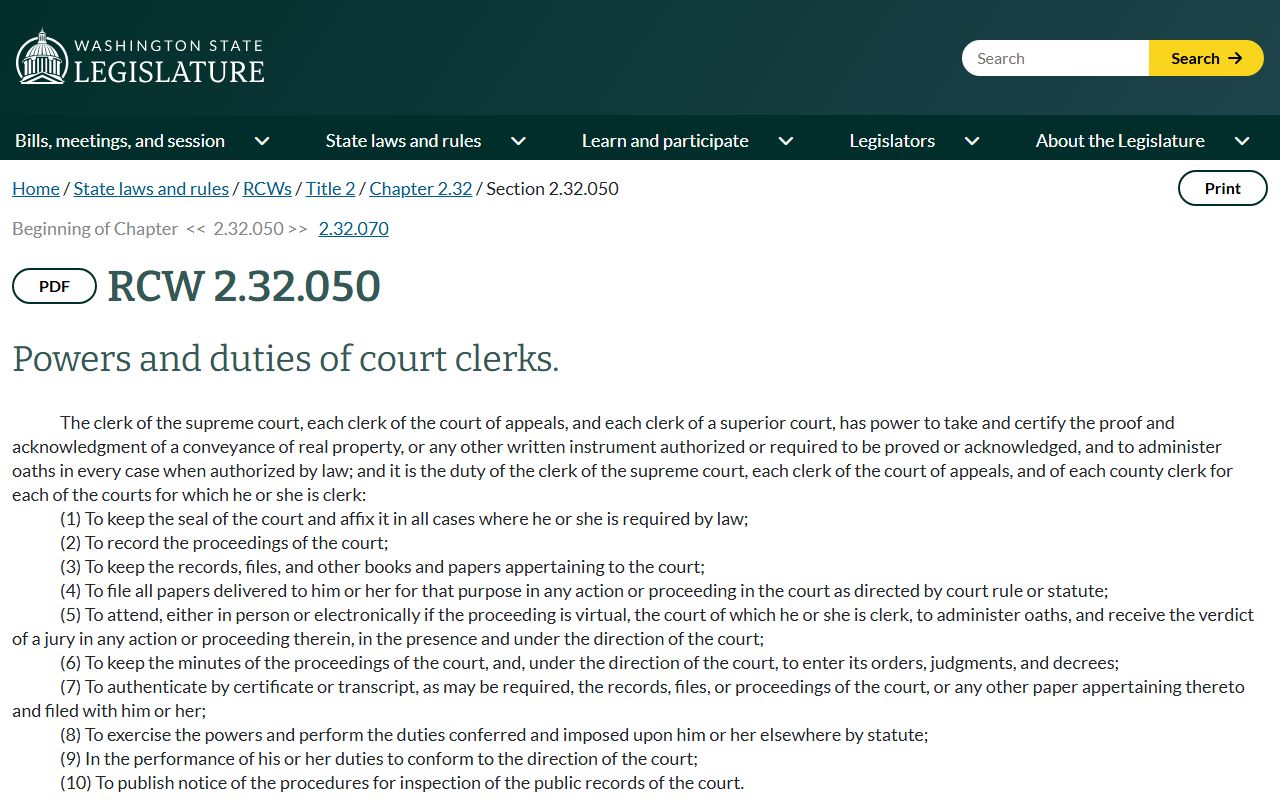
That duty is the reason probate copies come from the Clerk and not from another county office. See RCW 2.32.050 for the full text.
Common Spokane County Probate Terms
Probate comes with its own vocabulary, and the words matter when you read a file. A few terms show up in almost every estate or guardianship case. The short glossary below defines the ones you are most likely to meet in a Spokane County probate record.
- Testator
- The person who made the will and whose estate is being settled.
- Executor / Personal Representative
- The person named to manage the estate, pay debts, and distribute assets.
- Intestate
- Dying without a valid will, so state law decides who inherits.
- Guardianship
- A court arrangement where one person is given authority over the care of a minor or an incapacitated adult.
- Conservatorship
- A court arrangement focused on managing another person's money and property.
Knowing these terms helps you tell an estate case from a guardianship case. The two are related, but the court treats them differently, and some guardianship pages are not open to the public.
Spokane County Probate Filing Fees
The Clerk charges a set fee for each kind of probate or guardianship filing. Most major filings run $290, while a will deposit or a few in-case filings cost much less. One filing has a built-in break. A minor guardianship custody filing has no fee if the potential guardian is a relative. The table below lists the current probate and guardianship fees.
| Probate or Guardianship Item | Fee |
|---|---|
| Minor Guardianship Custody Filing (no fee if the potential guardian is a relative) | $290 |
| Letters of Administration, Guardianship, Testamentary | $5 |
| Nonjudicial Probate Agreement or Memorandum | $290 |
| Nonjudicial Probate Agreement within an existing court case | $20 |
| Non-Probate Notice to Creditors | $290 |
| Notice of Probate when probate is filed in another county | $20 |
| Petition to Admit Rejected Will | $290 |
| Petition to Contest a Will | $290 |
| Will Only | $20 |
| Will Repository | $20 |
The Clerk posts these amounts on the county fee schedule. You can review the Spokane County Clerk fee schedule for the full list and any updates.
The fee schedule page shows the probate and guardianship rows alongside other Clerk charges.
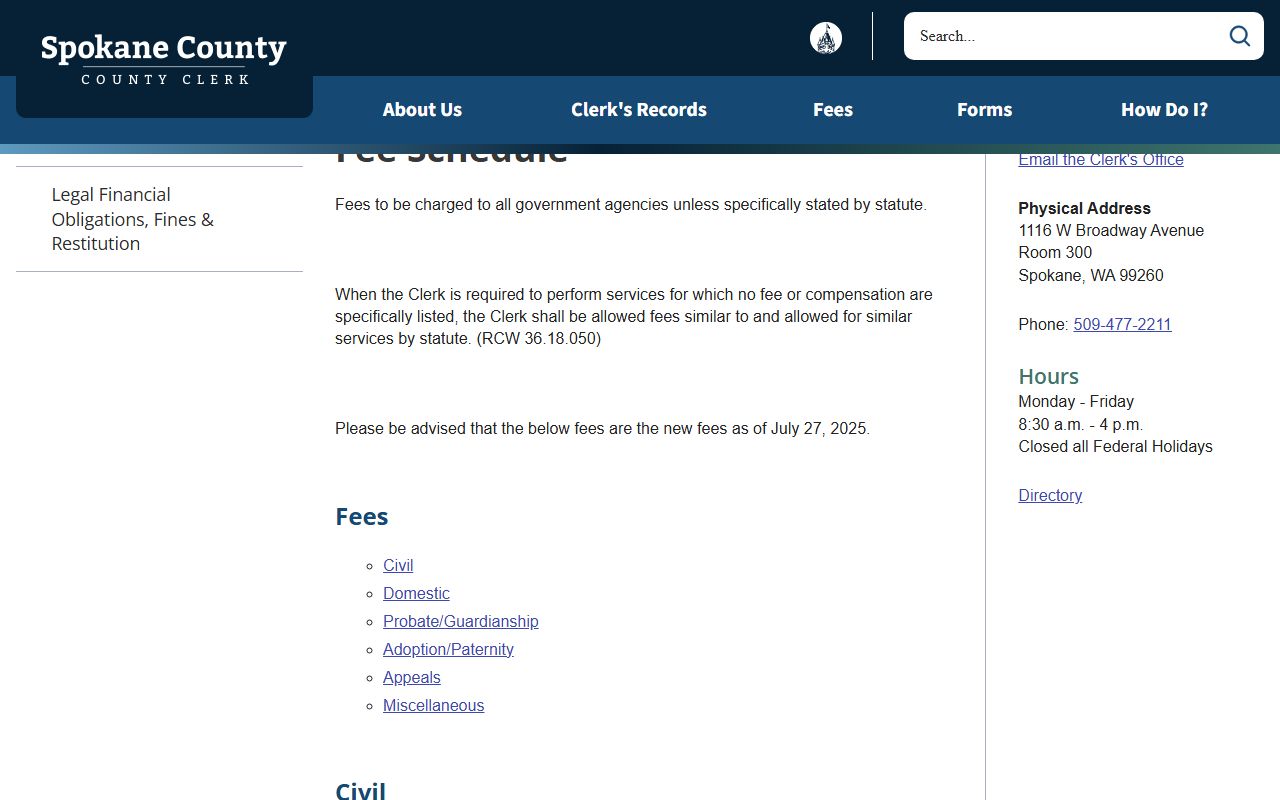
Fees can change, so confirm the current amount with the Clerk before you file.
How to Search Spokane County Probate Records
Probate cases are searched through the same court tools used for other Superior Court files. You can look up a case by its number, or by a party name under the Civil, Domestic, or Probate category. A name search needs at least a last name and the first initial of the first name. Copies of any document come from the Clerk.
The search fields below cover the Superior Court options that reach probate cases.
| Search Option | What to Enter |
|---|---|
| Superior Court Cases By Case Number | A known probate case number. |
| Superior Court Cases By Name | Last name plus first initial; pick the Civil, Domestic, or Probate category. |
| Superior Court Hearings By Name | Last name plus first initial for a hearing search. |
| Superior Court Hearings By Date | A hearing date, with an option to filter by last-name initial. |
The viewer gives you reference data. For a certified copy of a will, an order, or letters testamentary, request the record from the Clerk of the Superior Court. The broader search workflow is covered on the court records page.
Note: A probate case may appear in the viewer while some documents inside it stay restricted, so the case list does not always equal the full file.
What a Spokane County Probate File Holds
A probate file builds up over the life of a case. It opens with a petition and, in many cases, the will. It closes with a final order. In between, the file fills with notices, claims, and accountings. A guardianship file looks a bit different and tends to hold care plans and reports.
Here are the documents you commonly find in a Spokane County estate file.
- Petition to probate a will or administer an estate.
- Death certificate or other proof of death.
- The original will or a copy, if one exists.
- Oath or acceptance by the personal representative.
- Letters testamentary or letters of administration.
- Notice to creditors and creditor claims.
- Inventory of assets and the final decree closing the estate.
Guardianship cases add their own paperwork, such as care plans, periodic reports, and accountings. Some of those documents are restricted. A will contest or a petition to admit a rejected will can also show up where there is a dispute.
How Probate Works in Spokane County
Probate follows a fairly set order. It starts with a petition and ends with the estate closed and the assets passed on. Whether there is a will shapes the path, but the basic steps are similar. The walkthrough below tracks a typical Spokane County estate from open to close.
- Decide whether the decedent left a will and whether the estate needs court probate.
- File the right petition in Spokane County Superior Court through the Clerk.
- Pay the probate or guardianship filing fee, unless a no-fee rule applies.
- Submit the original will, or use the Will Only or Will Repository process where it fits.
- Request letters testamentary, administration, or guardianship if you are appointed.
- Give notice to heirs, beneficiaries, creditors, and other interested parties.
- Inventory the assets, handle claims and taxes, then distribute and file the final documents to close.
Each step may bring its own forms and, in some cases, a hearing. The Clerk can tell you what to file, but the Clerk cannot give legal advice. For a complex estate, many people work with an attorney. For related family matters, see the marriage and divorce records page, since both run through the same court.
Restricted Spokane County Probate Records
Most estate files are public, but not all probate material is open. Guardianship cases often involve a vulnerable person, so the court limits access to protect privacy. Medical pages, financial-account detail, and minor-related documents may be sealed or redacted. Those limits come from court rules and state law.
The rules at play are General Rule 22 and General Rule 31. GR 22 covers guardianship and family-law materials, and GR 31 governs access to court records overall. Adoption and juvenile matters are separate confidential categories handled apart from ordinary probate. The county fee statute that backs Clerk copy charges is grounded in state law as well.
You can read the county clerk fee statute that supports the Clerk's copy and certified-copy charges.
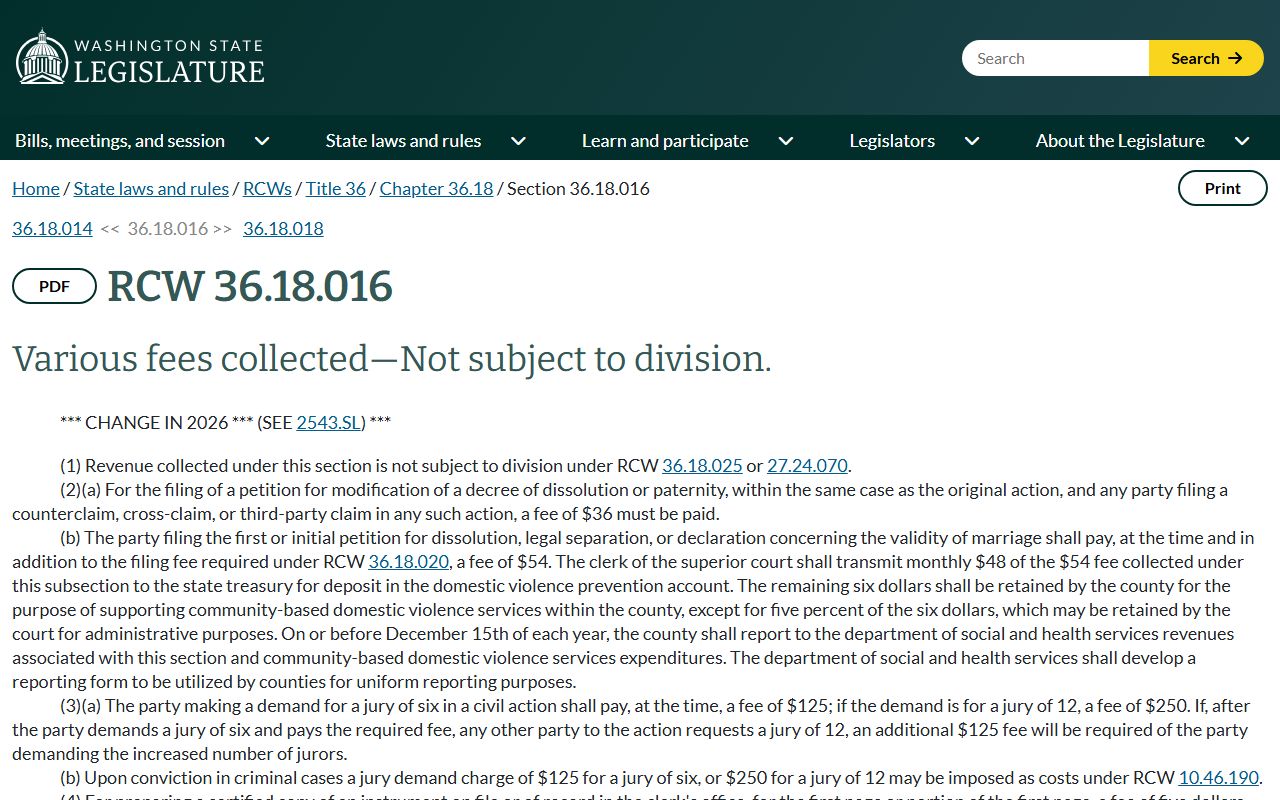
The fee rule is set out in RCW 36.18.016, which the Clerk cites for copy costs.
Contacting the Spokane County Clerk for Probate
For a certified copy, an older estate file, or a question about a probate case, reach the Clerk's Office directly. Staff can confirm whether a file is sealed, count the pages, and quote the copy fee before you pay. Bring the case number and party names when you can.
Clerk of the Superior Court
1116 W Broadway Ave, Room 300
Spokane, WA 99260
509-477-2211
Mon-Fri 8:30 a.m.-4 p.m.
The Clerk works inside the broader Superior Court system, which hears probate along with civil, family, and felony cases. For the office profile and copy-request steps, see the Clerk of the Superior Court page.
Plan your visit around the office hours, and bring a way to pay the copy fee. The Clerk does not give legal advice and cannot tell you how to handle an estate. Staff can pull a file, count pages, and quote a cost, but the legal choices are yours or your attorney's. For a contested will or a complex guardianship, many people get help from a lawyer or a legal-aid program before they file.